Your Comfort Zone is Killing Your Potential – How to Break Free

Comfort feels good. It’s predictable, safe, and easy. But here’s the problem: growth doesn’t happen in comfort.

Your comfort zone is like a warm, cozy prison—it feels safe, but it’s keeping you from reaching your full potential. If you’ve ever felt like you’re capable of more but somehow keep playing small, this is why.

The Science of Growth: What Happens Outside the Comfort Zone

Research shows that when we push past our comfort zones, we activate the brain’s learning and adaptability centers. Psychologists call this the “Optimal Anxiety” zone—the sweet spot between comfort and panic, where real progress happens.

Harvard Business Review found that professionals who consistently challenge themselves are more likely to get promoted and increase their earning potential.

Carol Dweck’s research on Growth Mindset shows that those who embrace challenges outperform those who avoid them, even when skill levels are equal.

Psychologists have found that stretching beyond your comfort zone creates new neural pathways, increasing adaptability and confidence.

Tony Robbins : “All growth starts at the end of your comfort zone.” Your next level is waiting outside of what feels familiar.

Want to explore more? Check out this TED Talk: Life begins at the End of Your Comfort Zone by Adela Strakova

The Hidden Cost of Staying Comfortable

Playing it safe might seem smart, but it comes at a cost:

Missed Opportunities – If you wait for “perfect timing,” you’ll wait forever.

Stagnation – Comfort leads to routine, routine leads to stagnation, and stagnation kills ambition.

Regret – The #1 thing people regret at the end of their lives? Not taking more risks.

How to Break Free and Step Into Growth

Here’s how to push past your comfort zone without overwhelming yourself:

Take Small, Scary Steps – Growth isn’t about jumping off a cliff; it’s about taking the first step. Do one thing today that makes you slightly uncomfortable.

Reframe Fear as Excitement – Your brain processes fear and excitement the same way. Instead of saying, “I’m scared,” try, “I’m excited to grow.”

Surround Yourself With Growth-Minded People – If your circle is comfortable staying comfortable, you’ll stay stuck. Find people who challenge you.

Track Your Progress – Growth is a process. Write down every small win. Momentum builds confidence.

Celebrate Discomfort – Instead of avoiding it, recognize it as proof that you’re evolving.

🎯 Looking for a great read on breaking out of comfort zones? Check this out: How to Break Out of Your Comfort Zone To Achieve Your Dreams by Wendy Buiter

Final Thoughts: Your Future Self Is Waiting

Everything you want—better leadership, new opportunities, bigger goals—is on the other side of your comfort zone.

Your challenge: Do one thing today that stretches you. Drop a comment below and let me know what you’re stepping into! 🚀

More Ways to Grow

🔹 Read More: Development Geek Blog

🔹 Explore Leadership Insights at Ad Solutus: AdSolutus.com

🔹 Join the Conversation on LinkedIn: Time to Listen

Let’s keep pushing forward! 🚀
Leadership Isn’t A Title – It’s a Skill Everyone Needs

Most people think leadership is about power, position, or a fancy title. But the reality? Leadership isn’t about authority—it’s about action.

Some of the most impactful leaders in history had no formal titles when they led change in the world:

  • Rosa Parks was not a politician or executive, but her quiet act of defiance ignited the civil rights movement.
  • Malala Yousafzai was just a student when she became a global advocate for girls’ education.
  • Harriet Tubman led countless people to freedom, despite never holding an official position of power.

They led by stepping up, not by waiting for permission.

The world doesn’t need fewer leaders—it needs more. Not just at the top, but at every level. Because leadership isn’t about rank—it’s about responsibility. And the best leaders? They also know when to follow.

I used to think you needed a title before anyone would take you seriously. At times, when I was early in my career I would see that play out when I would present an idea, be ignored or shot down, only to have someone in authority repeat it later.

And while that was frustrating, I chose to never follow suit and takes others credit but to use whatever voice I had to make sure that they were heard.

That’s when I came to understand a simple truth: Leadership is about action, not position. Some of the most effective leaders I’ve ever met never had a formal title—they just knew when to step up, support others, and drive progress.

The Research Is Clear : Leadership at Every Level Matters

🔹 Harvard Business Review found that companies with employees who demonstrate leadership at all levels outperform those that rely only on top-down leadership.

🔹 A Gallup study showed that organizations where employees feel empowered to lead (even without a title) see 21% higher profitability and 17% higher productivity.

🔹 Simon Sinek (Leaders Eat Last) explains that true leadership isn’t about authority—it’s about service. The best leaders don’t demand leadership; they earn it by lifting others up.

How to Lead – No Title Required

Here’s how to practice leadership—no title required:

Take Ownership – Leaders don’t wait for permission. If you see something that needs to be done, step up and do it.

Lead by Example – Your actions speak louder than any title. Show up with integrity, accountability, and consistency.

Support Others – Leadership isn’t about standing above—it’s about lifting others up. Help your team succeed, and you’ll stand out as a leader.

Know When to Follow – The best leaders recognize when someone else has the expertise and support them instead of competing for attention.

Speak Up and Add Value – Leadership isn’t about being the loudest in the room—it’s about saying the right thing at the right time. Contribute with clarity and confidence.

Resources to Build Your Leadership Skills


🔹 Watch this TED Talk on everyday leadership: Leadership Shouldn’t Be a Position by Rachel Kohman

🔹 Read more about how leadership is a mindset, not a position: Leadership Is A Practice Not a Position


Final Thoughts: Leadership Is About Showing Up

Leadership isn’t a title—it’s how you show up. Every team, every workplace, and every community needs more people willing to take action, not just take credit.

🚀 What’s one way you’ve stepped up as a leader, even without a title? Drop your experience in the comments!

Want more insights on leadership, mindset, and professional growth? Explore my other posts here and visit Ad Solutus for more resources.

Check out my latests posts:

🔹Breaking Bad Habits : Replace, Rebuild, and Thrive. Practical steps to transform your routines and unlock growth.

🔹 Leadership Isn’t One-Size Fits All – Learn how to adapt your style to empower your team

🔹Why Resolutions Fair – And What to Do Instead in 2025

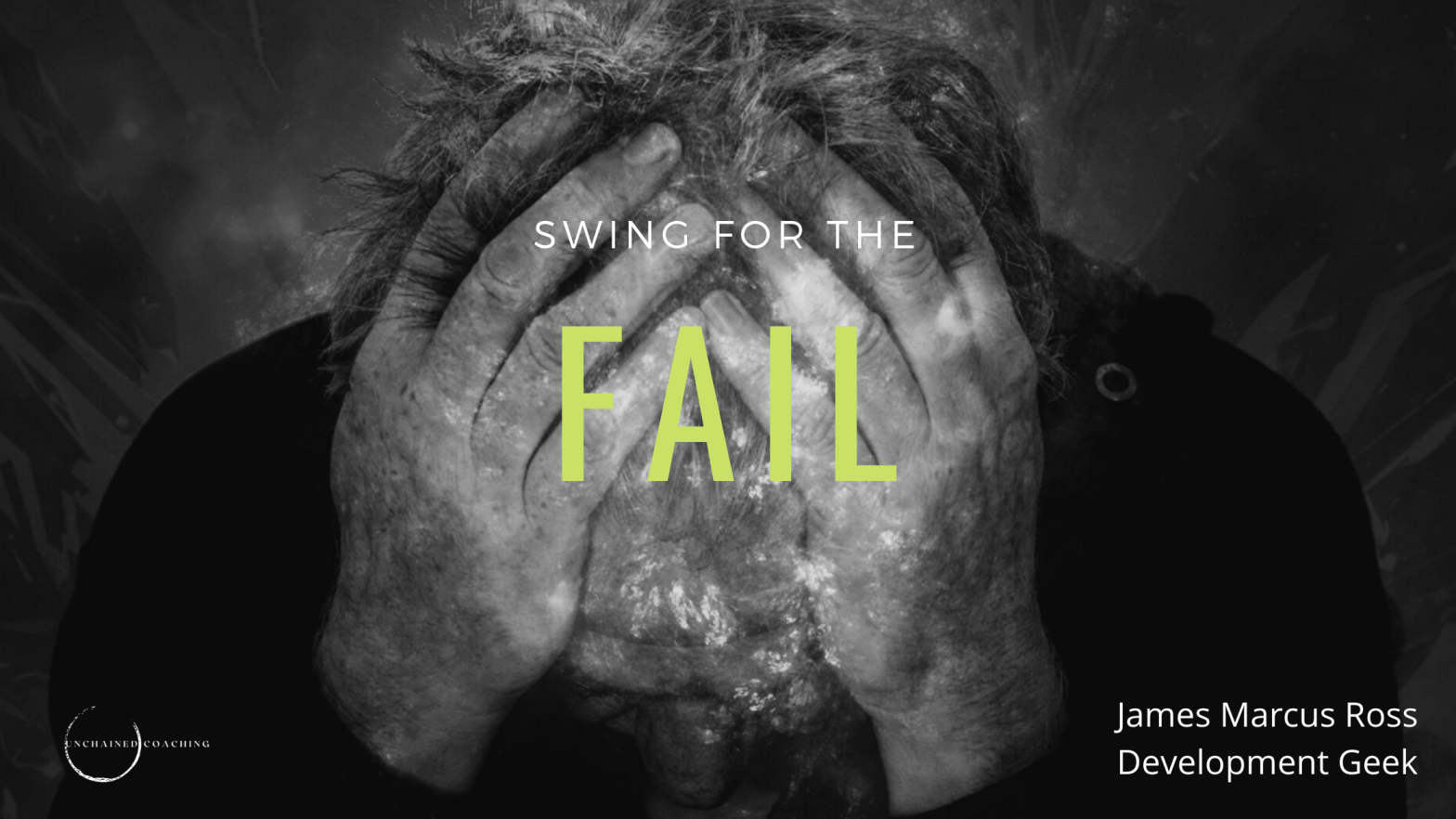
Swing For the Fail

Swing for the fences, Strike out or Home Run.

In a startup, we have to make big plays. We have to have people who feel ownership for the company and who are on the same mission. We need passion and hard work. They have to imagine what is needed before they are needed and when they see a problem they fix it without being told. We have to have people who are willing to operate outside their job description by taking on projects and tasks in which they are not subject experts.

Most companies want this. They want their team members to be autonomous. Managers everywhere complain about babysitting. And the need to tell their employees what to do all the time, or they will only do the bare minimum. This distrust requires larger and larger pools of managers to keep the plates spinning. It becomes a self fulfilling prophecy that nothing gets done without the managers pushing. And at the same time, nothing gets really done with the managers pushing.

There is this huge chasm between the two ways of thinking. But it is not because of the inevitable changes that occur with a large organization. It has very little to do with the size of your organization. It has to do with the culture of leadership along the way. How those leaders respond when things don’t go right? When they are fearful? When they begin to react to the situations and pressures of their companies and teams. Those reactions fuel the culture and it begins to turn.

People figure out ways to be successful. And that usually means trying to make the boss happy so they can feel good about their job and day.

Embrace Failure

There is a lot talked about in creating a culture where failure is embraced. It is so easy to talk hypothetically. And much easier than to actually embrace it. We have a natural fear of failure. Even speaking it’s name for some is akin to inviting it in to sit on their neck permanently. We have a strong desire to win. To feel good. To keep doing what feels good. And to run from what doesn’t feel good.

In fact, our minds have built in programming to avert danger and to reduce not feeling good. This plays a major role in how our habits are formed, which is the basis for a majority of our daily behaviors and actions.

Let’s move past lip service and actually embrace failure. It won’t be easy, but it has huge rewards.

Notorious and Unapologetic Failure

Okay, maybe not unapologetic but don’t shy away from it.

If you’re surrounded by others who also embrace failure, if your leaders, if your peers are constantly swinging for the fences – it makes it easier for you to do as well. The trick is you and those around you have to believe the same or at least be on the same journey.

You and those around you must discuss failure. It has to be unchained and escorted out of the dungeon and into the light of day. Give failure a spotlight. Recognize those who step out of the comfort zone and try to do something hard. When someone swings for the fences and misses – recognize them for it. If you encourage them they will keep trying. Most people worth a damn will diagnose what they did wrong and try to course correct. If you can, give them support with not only recognition but if you can lend your expertise and coach them on what they need to adjust to be successful next time, all the better.

Celebrate, Throw A Party , Recognize The Fail

It’s important to celebrate success. We need to celebrate milestones. Be proud of our accomplishments.

Just as important, if not more important, especially if your business or team is trying to create something or do anything more than keeping the engine going – is to celebrate failure when it is in the pursuit of more, better, different.  When someone is doing something more than keeping the lights on, they should be encouraged and embraced.

Crazy, I know, but don’t hang your head low, don’t expect others to show up to a meeting for a lashing – celebrate it. You are living our purpose to make something great happen, it wasn’t so great this time, and that is okay, we commend you for showing up in a big way. How amazing would that feel?

And guess what will happen – they will keep signing up for more.

When success comes from failure, when we learn and adapt, we will get better – our skills improve – we start to knock it out of the park. And we keep wanting more of that success.

If you don’t celebrate failure more than success, then you will eventually only have people sign up for what they know they can execute at 100% or are willing to take the risk that they could get lucky. Guess what these people aren’t learning, they aren’t growing, and they will never produce more for your team than they already came in knowing. They are playing it safe, and that is fine for a plate spinning company but not if you are truly trying to do something.

Fight the fear. Fight your natural tendency here. Give failure more than lip service. Make an award and stick it up on the shelf.

You can do it.

Embracing failure is probably one of the most important cultural things that any organization or really any of us can do. It builds resilience and perseverance which goes hand in hand with execution. We have to make that action happen.

https://www.linkedin.com/pulse/execution-test-choices-trade-offs-perseverance-james-ross/

Here Dr. Shillcutt discusses how sharing our failures and being vulnerable with others helps us become more resilient. I love the idea of releasing self shame.

Resilience: The Art of Failing Forward | Sasha Shillcutt, MD, MS, FASE | TEDxUNO

Putting intelligent failure to the test. Check out this HBR article by Rita Gunther McGrath.

https://hbr.org/2011/04/failing-by-design

7 Takeaways To Start Advocating For Yourself

Speak up for yourself

You’ll never get everything you deserve or everything you want from work. None of us can.

You can, however, stop accepting rejection, being walked all over, and not getting the respect that you deserve.

Regain your sense of self control by advocating for yourself.

Take emotion out of it.

This isn’t the time for other people’s feelings or how you even feel about the whole thing. This is straightforward, you are a unique and valuable human being and deserve to be treated with respect. You don’t have to impose your will on others.

It’s about clearly expressing your expectations of how you expect to be treated, how you will treat others, and that you expect to be treated with nothing less than respect.

Whether this is new territory for you or you’ve fallen into a bad habit of allowing others to treat you as less than what you deserve, it’s time to grab the reigns of your life and self advocate.

You’ll need to take stock in your values and your own

It’s important to know what is important to you.

  • What are your non-negotiables?
  • What behaviors are unacceptable to you?
  • What are you willing to do if someone can’t treat you with respect?
  • What do you need?

You won’t be able to clearly articulate to others if you haven’t taken the time to answer these questions for yourself. It’s a valuable exercise take advantage of this moment to take stock.

As you take stock remember to believe in yourself.

Valuable Person – You are unique

You are an individual and there isn’t another one of you. Be proud of who you are and believe in yourself.

Your self worth comes from within, and is not something that can be given to you. 

Build Self Confidence

Self Esteem is important to your own outlook.

  • Grow your awareness of your strengths.
  • Appreciate who you are and your contributions.
  • Be proud of who you are.

This isn’t egotistical this is having self worth.

Express Yourself Clearly

It can be difficult to have conversations with others about behavior. This is why it is critical to speak about what is important to you, what you need from others, and what you are willing to tolerate. This is not a moment to take them to task and air your grievances about their poor behavior.

Again, take emotion out of it and find the clearest language that explains what you are looking for. Use the answers to your values exercise and know what those three things that are most important to you are, and clearly share those.  

Stand Your Ground – Be persistent and firm

You will notice a immediate difference in others when you have these conversations, clearly articulate your non-negotiables and what you are willing to tolerate, and what you want. This does not mean everyone will immediately change their behavior. This is something new for you and for them, so it may take some time, so be realistic in your expectations of others.

That does not mean to tolerate bad behavior. Be persistent and reinforce your commitment to your values and what you’ve expressed as being paramount to you. You have to stay firm and committed. Stand your ground. Just don’t be surprised if it takes others a bit to adjust how they show up with you.

This is one area where it isn’t a negotiation. So long as you are not dictating what others will do, but are clearly expressing what you expect and what you will put up with – then you have every right to protect your rights as an individual.

Simple but scary

If you are thinking that this sounds simple but really kind of scary. Good. You that’s how it should feel. You’ve allowed yourself to fall into a pattern that isn’t doing you good. It’s time to respect yourself and expect the same of others.

That doesn’t mean it will be easy. Just that it has to be done.

Don’t let yourself get stuck in your head worried about how others will react. Work through these steps. And get out there and do it.

Nothing anyone can do is worse than the way you are probably feeling now. Letting yourself get walked all over and disrespected isn’t the issue. It’s letting it continue to happen when you know you can make a change for the better.

You deserve to be treated with respect – advocate for yourself and your life will never be the same.

If you enjoyed this article and want to continue your learning journey check out the below resources for some quick learning.

Check out my article, Stand Up for Yourself Without Stepping on Anyone By Being Assertive which fits in nicely with self advocacy.

https://www.linkedin.com/pulse/stand-up-yourself-without-stepping-anyone-being-assertive-james-ross

Check out this great share from Claire Shipman on confidence 101. Confidence comes from taking action. It comes from a longer course on Linkedin on called Women Helping Women Succeed in the Workplace that has some wonderful content.

https://www.linkedin.com/learning/women-helping-women-succeed-in-the-workplace/claire-shipman-s-confidence-101-2

Here in this three minute video Joel Garfinkle shares 3 Ways to Hone Your Self-Advocacy Skills at Work.

3 Ways to Hone Your Self-Advocacy Skills at Work

Quit Spewing Your Emotions All Over People

Quit Spewing Your Emotions All Over People

It’s a tough world out there. The business and work world has always been full of stress and difficulties. Challenges abound whether you are at a small business, a startup or a large corporation. Lack of resources, interpersonal politics, more and more expectations – always more work, not enough help, and mostly never enough time.

Now with the Covid-19 pandemic there is a whole new level of stress, uncertainty, and amplified emotions. This is a time for us to practice more empathy and understanding of one another.

And we need to also hold one another to a better standard of behavior. So bear with me, this is a tough needle to thread in one posting— We have to balance our empathy and understanding for another’s situation with allowing others negative emotions expressed unprofessionally to be accepted as the norm.

Celebrating Bad Behavior

In the most extreme we’ve celebrated inappropriate behavior and looked the other way as some of these assholes have made their way to the top because they got “results”. When we look at many that have risen to a position of authority in the last few generations of leadership we see a lot of examples of results at any cost thinking. In fact, it pains me to write leadership in that sentence as these are not leaders, they are managers, CEO’s, VP, owners, and certainly not leaders.

Some have learned how to cover that behavior up in values and mission statements that are spoken to and used politically but when you dig below the surface at the decisions and actions taken – results regardless of how they were obtained- is what is rewarded.

Look around where you work now and you know exactly what I’m talking about here. Now, we can definitely point to the few who are true believers and are leaders. Those who maintain their professionalism and are the best examples of their profession. They treat people well. They don’t take out their day or circumstances on other people. They have emotions and feelings but do not lash out at others.

Unfortunately, it is not only that elusive Them, it is also all around us. We are part of the problem.

Stress Is No Excuse

We all have bad days. Occasionally our negative emotions rise to the top and are on display for all to see. Recognizing emotions is one thing. Understanding that negative emotions are going to happen and they will spill over from time to time. And still, this is never an excuse for poor and unprofessional behavior.

Passion is good. Dig deep and use that passion to propel forward. Use it to motivate and inspire others. Never use your emotions as a weapon against others. Whether it be intentionally or because the pressure has built up and need to release on the next person you come in contact with.

Emotions Are Not To Be Trusted

Emotions are not the enemy but they are not to be trusted. They are unwieldy and unpredictable. They have no logic. They come and go for an incredibly myriad number of reasons far too complex for this humble writer. One moment they can come from some deep seated compulsion rooted in an unexplored and unrealized childhood trauma or because we ate the wrong food before bed, didn’t get the right exercise the day before, and haven’t had a proper bowel movement. Our emotions cannot be ignored but we must not be ruled by them.

That is the way of madness.

The good news is that this is a skill that can be learned. Actually it is a number of skills that all need to be employed to be successful at professional leadership. That professional leadership is not something for a select few but for anyone who works with others and are trying to accomplish anything of value.

It is time that we place civility, politeness, courtesy to one another, mature conduct and professionalism at the top of what we respect and reward. All of these can be done and still be action oriented, still get amazing results. And those results will not only be the numbers on a balance sheet, they will be fully realized outcomes that are desirable for all.

Enjoy my LinkedIn post on Politeness : A Touch More Civility Goes A Long Way

https://www.linkedin.com/pulse/politeness-touch-more-civility-goes-long-way-james-ross/

Check out this Forbes post from Stephanie Wells

https://www.forbes.com/sites/yec/2019/05/02/top-four-ways-to-remain-professional-under-pressure/?sh=4f84b4262c87

Ways to Control Emotions in Workplace

3 Ways To Stop Screwing Your Self Improvement

Get Out Of Bed

Self improvement books should be no more than 15% of your total reading.

There you go right to the point, no beating around the bush. No fancy lead in.

Quit reading so many self improvement books.

Unless you’re a self help book critic or teaching courses on the subject, there is no reason to read them all. There are a vast world of books to read and you will find help in your personal improvement from a variety of sources. Those other books will help you in your journey more than reading nothing but self help material.

Learning about self development and understanding the core principles makes for a strong foundation – that doesn’t mean reading every book on the market. There is typically one prominent book each year that brings something truly new to the table. If you haven’t found your one magic book that speaks to you, keep reading and you’ll find that one.

Outside of that, stop reading about improvement and improve.

Read about other things, other skills that you need. The whole purpose of self development is that it leads to improving yourself in a tangible way that you see better results and outcomes in your life, and you feel good about your improvement and your added successes.

The problem is that for some it is akin to reading about fitness and never getting out of bed.

Get to the root of your issues.

Dig deep and do the hard work. Work through what you are trying to solve for. What are your goals? Then break it down into manageable steps that you can start taking action immediately and consistently.

If you cut into a beautiful cake and the center is uncooked or super dry, it doesn’t matter how amazingly the cake was decorated. Getting good at making beautiful fondant is a great skill for a cake artist and baker. Doesn’t matter much if you can’t bake the actual cake. 

Many times when I’m helping someone with their development and as I’m asking questions to help challenge their thought process, we typically make a breakthrough as we get closer to the root of the problem. You see, we all like to stay away from pain. Our internal systems are designed around the pain/pleasure response.

The best breakthroughs come when we are willing to dig past the surface layer and begin to look directly at our issues. If you spend time making goals, and working on improving skills, and you don’t get to the root of the issue – you’ll still make progress.

Speaking of getting to the root cause, many, many times we miss the most basic parts necessary in making meaningful change in our lives. Start with the basics first.

Big Basic Four -Daily Energy Fundamentals

At this time of year it is very common to make commitments around fitness, our activity levels and our eating. This is a good start. Yet, we tend to not see these commitments through because we are focusing on the wrong thing, losing weight and being in better “shape”.

I’m on a personal kick to improve my energy levels. I find that I don’t have the energy always to keep up with what I want to achieve each day. My mental energy is lagging because of my physical condition.

Instead of making a huge push in one area of my life like getting on the treadmill every day for 3 hours. Which works in the short run but not effective in the long run as I’ll end up burning out, getting bored, or injuring myself.


What I’m doing right now is working on the Big Basic Four.

  • Sleep
  • Hydration
  • Nutrition
  • Activity

Each of these are interconnected in important and interesting ways.

What I eat before bed, how well hydrated I am, and if I’ve pushed my body with energy enhancing activity all contribute to how well I sleep.

How well I stay focused on eating more nutritious and energy enhancing foods, depends on how much energy I have to push off temptation. This is one of the ways that not having enough sleep can really impact my other Big Basic Four.

The moral of the story

Knowledge is good. Don’t let it become an addiction and substitute for getting off your ass and making it happen.

Dig past the surface layer and go after the real issue – you’ll multiply the results of your efforts.

The big stuff isn’t always the issue. Keep those basic and daily energy fundamentals in mind. Get good sleep, drink lots of water, put good nutritious things in your body, and do fun activities that keep you moving.

It may seem silly that we have to be reminded of such things, but it is the simple things that are at times the toughest to remember. We take for granted the simple and basic stuff.

Quick read on self management

https://www.linkedin.com/posts/jamesmarcusross_improving-the-quality-of-work-we-produce-activity-6680922554695323649-25Qi

Science on the mysteries of sleep

https://www.sciencefocus.com/the-human-body/the-mysteries-of-sleep-everything-we-dont-know-about-why-we-snooze/#:~:text=Decades%20of%20research%20have%20linked,doing%20them%20during%20the%20day.

Dark Side of Self Improvement

When we secretly believe there is something wrong with us.

We are not broken. We are just at a different stage of our development. Don’t fall to the Dark Side and follow someone else’s path.

The Dark Side of Self Improvement | Suzanne Eder | TEDxWilmington

Warning : You’re Doing The Two Minute Rule All Wrong!

If you are addicted to task lists you must institute this rule immediately.

You are wasting valuable time each day and may even fuel your procrastination habit if you are making lists without this rule.

The Two Minute Rule

If Task < Effort to Remember + Record + Categorize  + Prioritize +Time to Complete = Then Do It Now.

It is an absolute waste of time to write down, categorize and come back to an even longer list of activities you need to complete when it is something you could have knocked out in two minutes or less.

Except—-

There are also important rules for this rule.

Often, the two minute rule is misapplied to mean that this is effective at all times. Not at all. Only apply this rule when you are not in working or project mode. Otherwise, you are hijacking your productivity and attention.

The two minute rule is most effective when you are doing processing work, anything that is sifting and sorting. Or in those in-between moments in your schedule or between tasks.

We must reduce distractions and anything that can take us off task when we have scheduled something or working on something  that is a critical and important use of our time.

If you have devoted a specific time to a task – and think of something that needs to get done that is less than two minutes, then by all means write it down – and then if possible get to when you complete your scheduled work.

It’s about balancing the need for getting those tasks out of your brain and onto your list, prioritizing those items, and then placing them in your schedule based on their importance and the time you have.

This has to be done without creating longer and longer lists that grow faster than your ability to get to them, or as a mechanism for keeping that procrastination habit fed.

A Word (or 190) of warning about The Two Minute Rule.

This is also only useful in the standard and basic task based, list based, time management method and if you are not using a workflow management system.

 In our modern and sophisticated world, a lot skill and near mastery has been placed into nearly aspect of our lives with the intention to grab our attention. This attention grab is distracting us in novel and unprecedented ways.

For many of us, our brains are already wired for distraction and then you add in these designed to distract additions to our lives that we invite in through our computers, tablets, smart phones, televisions, voice enabled devices and speakers, and even refrigerators.

Each application and online service is screaming for attention brutally, incessantly, and subversively.

Everything is about attention.

Everyone is vying for your attention. And every bit of attention where you are not giving it as a conscious choice of your own, is a distraction.

This is where we must do more than only apply The Two Minute Rule. We must become more sophisticated in the use of our workflow systems and our own personal methods for being intentional with our time.

What methods are you using to not only be more productive but to take back control of your day and attention? Love to hear from others what they are doing. Share and learn from each other, every day.

  • For more on time management and productivity here is an in-depth dive into how to be productive and never busy.

Above all keep it simple. Say no to anything that doesn’t fit your priorities and values. And keep hacking away. Time is relentless and so you must be with your management of your time.

https://www.linkedin.com/pulse/how-productive-never-busy-james-ross/

Get more focused, think on your feet.

I’m really interested in the tension between overscheduled and unscheduled. As a creative person I need my time to do nothing and allow my nothing to produce. Yet, I’m also one that fills up my calendar. This is an interesting talk around leveling up our creativity through boredom.

Kyle T. Webster: Make Time for Boredom

Learning New Skills In Startup Land – My Journey

Working with three startup companies has been a new experience for me. It’s been a lot of work, stress, and fun – and we are only just getting started.

Commonly, startup businesses face a number of challenges.

Hiring Qualified Candidates, HR & Payroll, Competition, Lack of Clear Marketing Strategy, Capital and Minimal Budget, Lack of Structure, Poor Management, Communication, Time Management, Delegating Tasks, Focus –  Choosing What Not To Do, Self Doubt, Business Growth, Choosing Pricing, Products, Services – and Thriving on Limited Resources

Whether it be my own little coaching company I started a year ago, the startup job matchmaking marketplace technology company, or the accessible wellness and telemedicine veterinary healthcare company – each of these challenges come up and rear their heads in different ways. Some more ferociously than others, and some are lurking out in the mists waiting to take a swipe at us.

Those entrepreneurs and startup leaders that I coach and those in my network speak of these issues often. It isn’t glamorous but it is the reality of moving from a vision to building or running the thing. Passion is not enough. Neither is knowledge or skillset. While these are very helpful – they do not usually equal success.

You have to make more good choices than bad with the resources you have. Mistakes will be made and that is fine, learn from it and move on. However, you have to build momentum and properly make use of the resources you have. This means having a realistic strategy in place that takes into account the resources you have at your disposal.

Time is compressed in startup land. Everything moves at lightening speed. You move and pivot, adjust and learn on an hour to hour, day to day basis. It is learning on steroids. And it is an incredible amount of fun.

For myself personally, this has been a great challenge. It has pushed me out of my comfort zone in a number of ways and challenged some assumptions about how I show up. The most important thing is that I work with some amazing people. They are passionate. Each of them are leaders in their own right. Visionaries. They each have a huge contribution to make. I see them growing each day and as a amazing  that is one of my favorite things to see. 

Right now, the biggest thing I’m concentrating on is adjusting for the avalanche of things that need to be done – and ensuring that I give myself the space to do the important work that needs to be done. Sounds simple.

I have this internal rub that are at constant war with one another. I want to get the most out of every minute, every hour of the day, and I start to fill up my calendar with urgent and important things. Then I start to not have the time to get to some important items. I over commit because I start to think ‘work harder’, you can get it all done.

And this is all in direct competition with the fact that I get more work done when I’m playing, when I have a more open schedule – I’m able to actually do a lot more.

As I write this it sounds ridiculous, yet I think it is important to be vulnerable and share this personal reality because I know I’m not alone. I have some mechanisms in place to help reduce this scenario from coming to full tilt. – Still, there is always this tension in my scheduling and my work.

I will continue to share my journey and I’d love to hear more from others which of these areas have reared their head in your world, and how you work to overcome them.

Let’s keep daring to fail and sharing what we learn.

It’s Your Story – Two Steps To Edit Your Behaviors

Start writing a new story. It’s yours, edits as you see fit.

We all behave within the confines of how we define ourselves. We do this in all kinds of ways. Our tape is on continual replay.

What do you say to yourself?

Do you say you are no good at math?

Are you calling yourself shy?

Or no good at cooking?

Or unmotivated?

Or stupid?

The list goes on and on. We each have some sort of story that we tell internally and of course it leaks out externally as well.

What we say becomes a loop, over and over again.

Mental Programming

Whether we recognize it fully or not, our brains work in many ways similar to a computer. We have all sorts of programs running. Many running in the background and even more working without us even realizing it.

And while our minds are undoubtedly messier than a computer, with all sorts of things colliding into one another and not running in the same exact logic gate manner that we understand with computer – there are similarities that we can use to better understand how we can make adjustments in our lives.

One of the reasons that many people find it difficult to make significant change in their own behavior is because of the power of this ever present program that we have on a loop. It is constant and pervasive. And if you don’t take control over the language you speak about yourself – it is very difficult to make any lasting change.

Our Language Becomes Our Reality

The language we use to describe ourselves has a lasting impact. Because not only does it sit inside ourselves; in our self conscious and our subconscious, we use it over and over again. We repeat it over and over again, each time giving it more reinforcement.

Then our actions follow suit with the words we use. We are bad at something, so we don’t do well with the thing, and that reinforces our belief system, proving we are right. The thing we don’t think we are good at, becomes the thing we don’t like to do. It’s uncomfortable which is close enough to pain to trigger our pain/pleasure response. That in turn reinforces our body and minds desire to protect itself from pain and to only do the pleasurable things.

See I told you this is a waste of time. I knew that would never work.

Knowing this, it becomes apparent, one major way to hack your behaviors is to hack your thinking.

So easy, right.

Absolutely not.

Simple not easy

It may be simple to understand. It may be clear. But it isn’t easy. If it were then everyone would be doing it.

The problem is that we’ve had a lot of time to be set in our ways, we’ve played this episode over and over again in our head – and so it is very challenging to break away and unchain ourselves from our old ways of thinking. It’s who I am. And if that is what you believe than that is unlikely to change without a major event shaking your thinking and belief system.

While it isn’t easy – there are ways to start priming your brain and adjusting your habits.

Always Start With Gratitude

The first is to start every day with gratitude. While it may seem that we are suddenly introducing gratitude into the conversation and it may not seem to track. But gratitude is the antidote to many things.

Starting each day with gratitude adjusts our thinking. It requires us to think about the positive. To be grateful for what we have. This is the antithesis of anger and fear, concern for the future. All of the things that we can start our day with and becomes a slippery slope. You’ve come a long way, be grateful for what you have, be grateful most for the people you have in your life.

This is a great exercise and practice to get used to the first thing in the morning when you wakeup. Not, oh, I’m so tired and I’ve got so much to do today, and where is my coffee because I need a jolt to even think about starting my day. Gratitude is a great entry point to priming your brain for positivity.

STOP

The next thing is to stop it, every time you hear yourself telling a story about who you are that is inconsistent with what you want to be.

Find a word, like Stop, that you can tell yourself. It isn’t enough to stop yourself midstream and move on, the thoughts have already been formed, so you have to connect it to something that is a mental reminder that it isn’t true. Stop, that is a story and the wrong one, it doesn’t have to be true. That is what I’m telling myself when I say stop.

Build this habit. It will take a while but that is okay. What you will notice at first is how often you need to do this. Until you spark your awareness and are looking for these stories, you won’t realize how pervasive they are in your mental dialogue.

Edit

There are other steps to take to adjust your story and then move into hacking those habits. For now, just do these two things, and do them well. It isn’t good to try and take on too many steps at one time.

Write a better story for yourself. First by expressing gratitude and then by stopping the stories that don’t lead to the behaviors and outcomes that you are looking for.

You can do it. You deserve it. And you can change.

After all, you wrote the story to begin with. It’s yours. It’s time you own it and edit as you see fit.

  • Here are my top 3 practical ways to give thanks and build your gratitude muscle.

https://www.linkedin.com/pulse/we-together-3-practical-ways-give-thanks-today-begin-ross/

  • Mary Morrissey shares 3 priming examples to help you move toward your goals and dreams with greater ease and speed.

Priming Examples That Influence Behavior | Mary Morrissey

  • Four minutes with Jim Kwik on negative self talk

Jim Kwik: How to End Negative Self-Talk

Start The Day With A Cup Of Earl Grey : Magic Morning Moments

Start the day with a cup of Earl Grey.

There is nothing like starting the day with a scalding hot cup of tea. The warmth as I cup the mug. The steam wafting upwards. Looking into the water watching the tea darkening the water and infusing it with it’s deep and strong black tea flavor. Putting it down on the table next to me as I write and waiting for it to drop below lip scalding tolerances. This routine sets the morning into motion.

Popping on my headphones I pick my first track of the day and set to writing.

The first thing I always do is write in my personal journal. Here is where I get to freeform and write whatever I feel like. Not worrying if it is good writing, or if anyone will ever read it. Writing to get what is first on my mind out and on the page. For me, it also really helps to organize my thoughts from what can sometimes be a messy and unkempt room.

Then I move onto this blog. Some times what I’ve jumped into for the day in my journal becomes the basis for the blog. Otherwise, I pull out my list of topics and things that have been of interest to me lately.

I also really love researching things and following my train of thought into the online verse and seeing where that research takes me. Following one search after another. Along one word or phrase to grab my attention and become the focus of my next search.

The morning allows me the time to do this more readily. Once the day gets going any research or learning is very specific to the task at hand. This is my time to learn. And these connections are invaluable.

 I’m a curator of information and connections. There is a great rhythm and movement to the world. A connection between our experiences. A truth that begins to become apparent the more we learn.

I’ve gotten made fun of a lot in life for knowing or being interested in learning about things that I will never use. Useless information.

And while, surely with the amount of data the world is generating every minute, there are things of little to no value, I’ve been fortunate to be able to put to use most things that I’ve learned. I may not always know when it will be of value. And some of it is just plain fun and in the moment I have no idea how it will connect back to anything. And still, I routinely find circumstances to put even the most esoteric of threads of knowledge to use.

This could be the contributing factor in my being made fun of for collecting such information since I don’t mind sharing it with others when the time seems right.

Sorry, not sorry. It is who I am.

The joys of life are found in the moments. Check out this oldy but goody that I wrote a couple of years ago as a way to get your day going.

https://jamesmarcusross.com/2019/11/13/wednesday-motivation-november-13-2019/

  • Following the lead of my favorite starship captain, my go to tea is Earl Grey.

https://www.chateaurouge.uk/blogs/gourmet-discoveries/what-every-tea-drinker-should-know-about-earl-grey

  • Here are some fun useless facts to put to use. Everyone deserves to have purpose.

100 Useless Facts to Keep You Entertained

  • First track of the day : Higher Love – Kygo and Whitney

Kygo, Whitney Houston – Higher Love (Official Audio)